H11A1S1(TA)-V Everlight Electronics Co Ltd
Everlight H11A1S1(TA)-V LED: A Reliable Powerhouse for Modern Industrial and Automation Applications
In today’s rapidly evolving industrial and automation landscapes, lighting solutions must not only meet performance demands but also integrate seamlessly into complex systems while ensuring longevity and energy efficiency. Among the leading optoelectronic components, the Everlight H11A1S1(TA)-V LED stands out as a high-performance candidate for applications requiring precision, durability, and compact design. This series is engineered to address the growing need for stable, high-efficiency lighting in industrial control environments, smart automation, and high-density electronic systems.
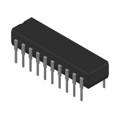

Why the H11A1S1(TA)-V LED Excels in Industrial Automation
The H11A1S1(TA)-V LED is optimized for environments where consistent optical output and minimal power consumption are critical. Its high luminous efficiency reduces energy costs while maintaining brightness levels, making it ideal for factory automation, machine vision systems, and automated lighting networks. Unlike traditional lighting solutions, this component delivers stable color rendering and long-term reliability, ensuring minimal degradation over extended use—essential for continuous operation in industrial settings.
Beyond efficiency, its compact TO-8 package design allows for high-density PCB integration, a key requirement in modern automation systems where space is limited. Whether used in robotic lighting, sensor-based illumination, or precision lighting modules, this LED maintains optical consistency, reducing maintenance requirements and improving system performance.
Versatile Applications Across Digital Infrastructure and Smart Systems
The H11A1S1(TA)-V LED’s versatility extends beyond industrial lighting, making it a valuable component in automotive, telecommunications, and consumer electronics. In automotive applications, it powers headlamps, interior ambient lighting, and signal indicators with reliable performance under varying conditions. In telecommunications, its use in optical modules and signal indicators ensures clear data transmission in high-speed networks. Meanwhile, in consumer electronics—such as displays, wearable devices, and smart home systems—the LED’s compact size and energy efficiency enhance functionality without sacrificing durability.
Its wide application compatibility ensures seamless integration into existing lighting architectures, whether in linear arrays, matrix displays, or custom-designed modules. This adaptability makes it a preferred choice for engineers designing smart lighting solutions that prioritize both aesthetics and technical performance.
Supply
구입하다 H11A1S1(TA)-V ?
ICHOME은 고객이 신뢰할 수 있는 독립적인 전자 부품 유통업체가 되기 위해 최선을 다하고 있습니다.
BOM 비용 절감 | 구하기 힘든 부품

구입하다 H11A1S1(TA)-V ?
ICHOME은 고객이 신뢰할 수 있는 독립적인 전자 부품 유통업체가 되기 위해 최선을 다하고 있습니다.
BOM 비용 절감 | 구하기 힘든 부품